
We've been talking to more product teams lately who've made the jump to embedded analytics. The pattern we're noticing isn't just about adding dashboards to their products. It's about the domino effect of benefits that follow once analytics become a natural part of their user experience.
One of our customers, Cashpad, integrated embedded analytics into their restaurant management platform in 10 minutes. Not 10 weeks. Minutes. Their restaurant managers now make daily operational decisions based on real-time data instead of waiting for slow PDF exports. That's the kind of benefit that compounds.
Customers Now Expect Analytics Inside the Product, Which Turns a Nice-to-Have Into a Deadline
The pressure to deliver customer-facing analytics, whether built in house or bought as a customer-facing analytics product like ours, has intensified. Customers expect interactive dashboards, not CSV exports. Competitors are shipping analytics features faster.
Product teams are stuck between three bad options: build in-house (6-12 months), buy enterprise BI, where most vendors quote per deal rather than publishing a price, or deliver nothing. The benefits of embedded analytics solve this dilemma by removing the friction between your customers and their data. No toggling between apps. No waiting for exports. No learning curves.
Embedded Analytics Ships in Days Because the Multi-Month Part Is Already Built
This is where embedded analytics changes the equation entirely. Traditional approaches trap you in multi-month development cycles. Enterprise BI implementations are ones we would budget in months. Building in-house? Plan for 6-12 months minimum.
Modern embedded analytics platforms deploy in days. Here's the reality: integrate an SDK in 10 minutes, connect your data source, customize your dashboards, and deploy within days.
Orbility, a parking management platform, deployed multiple custom dashboards in just 3 months, a complete data infrastructure modernization that would have taken over a year building internally.
The speed benefit isn't just about faster deployment. It's about staying focused on your core product while analytics runs itself, beating competitors who are still stuck in 6-month BI implementations, and responding to customer demands immediately, not eventually.
When evaluating build vs. buy for embedded analytics, speed-to-market becomes the deciding factor for most product teams.
The Embedded Analytics Benefits a CFO Can Check: Adoption, New Revenue, and Support Load
Let's talk about the outcomes that matter to your CFO and board.
Faster user adoption: When analytics live inside your app, customers actually use them. No separate login. No training required. One customer told us their analytics features went from "nice to have" to their most-used capability within weeks of embedding them properly.
New revenue streams: This one surprised us initially. Several customers now monetize their analytics as a premium tier. One customer reported paying external BI vendors more than €10K a year to serve their customers' analytics needs. That is one account rather than a benchmark, and the useful part is the direction of the flip rather than the number.
After embedding analytics, they flipped the model, now they charge customers for advanced analytics features and turned a cost center into profit.
Reduced support burden: Generic questions like "Can you export this?" or "Can I see this by region?" disappear when users have self-service analytics. Your support team stops being a data export service and focuses on actual product issues.
The ROI of embedded analytics becomes obvious fast, especially when you compare it to the alternative costs.
How to Check Them, Given That the Ranked Competition Advertises the Same Three
The three above are adoption, new revenue, and support load, and the ranked competition advertises the same kind of list. None of the three is checkable as written. A benefit you cannot separate from who opted into it is a story, not a result, so here is what each one has to be turned into before it belongs in a board pack.
Adoption. The tempting measure is usage of the analytics feature, which is also the least informative one, because the customers who open a dashboard first are the ones who were already engaged. Measure it as a cohort instead, and start by removing every account that opted into a beta from the population, because a beta participant who signed before the release still lands in the pre-release group and contaminates it. From what remains, split on the release date and compare product usage at matched tenure between accounts that had the feature available and accounts that did not.
Revenue. Monetising analytics as a tier produces two numbers, and only one of them is new money. Attach rate tells you how many accounts bought it; incremental revenue tells you how much of that was not moved from another line, which you can only see if you also track discount and downgrade activity on the base plan in the same window.
Support. Ticket volume falls for many reasons, seasonality among them, so a raw drop proves little. The check is the mix: count the tickets in the categories the feature was supposed to absorb, exports and filtered views, as a share of total tickets, and read the share rather than the count.
What none of this survives. If the feature shipped in the same quarter as a pricing change, an onboarding rewrite, or a large customer segment arriving, then no comparison here is clean and the honest reporting is to say so. Naming the confounder is not a weaker result than claiming the benefit; it is the difference between a number your CFO can defend and one that gets withdrawn in the meeting.
Engineering Judges Embedded Analytics on Architecture, Security, and Technical Debt
Product managers care about speed and adoption. Engineering leads care about architecture, security, and technical debt. Embedded analytics benefits both.
no infrastructure for you to run: No servers to maintain. No data warehouse infrastructure. No weekend deployments.
The platform handles updates, scaling, and security patches automatically. Your engineering team stays focused on your core product features.
Security built-in, not bolted on: Multi-tenant isolation, row-level security, SOC 2-ready architecture, and token-based authentication come standard.
You're not building security from scratch or hoping your in-house implementation doesn't have vulnerabilities.
Scalable without rebuild: As your customer base grows from 100 to 10,000 users, modern embedded analytics platforms scale automatically.
No expensive re-architecture. No performance degradation. The infrastructure grows with you.
From a technical perspective, this matters because every hour your team spends maintaining analytics is an hour not spent on features that differentiate your product. The opportunity cost adds up fast.
The Benefits Only Become Visible Against What the Alternatives Quietly Cost
Here's where the benefits become clearer through contrast.
The figure carries the numbers. What it cannot show is what each route leaves you holding afterwards.
A build is not finished when it ships. The features teams postpone first are the ones customers ask for last but loudest: PDF exports, scheduled delivery, multi-language support. Meanwhile the engineers maintaining analytics infrastructure are the same engineers who would otherwise be building the thing your customers actually buy.
Enterprise BI adds a second cost that never appears on a quote, which is the time before anyone sees a dashboard. Budget three to six months for the implementation, and add the learning curve of a modelling language such as LookML on top of it. The published side of the pricing is Power BI Pro at $14.00 and Premium Per User at $24.00 per user per month paid yearly, with Embedded and Fabric capacity listed as variable and routed to sales (Power BI pricing, checked 7 August 2026). Looker and Sisense publish no licence figure at all.
The flat-rate route trades that for a narrower kind of control. You do not run the infrastructure, so you do not tune it either; your side stays the data connection and the dashboards.
Over ten years the shapes differ more than any single figure captures. Sumboard on its published Growth and Business tiers is €23,880-€59,880 of licence at today's price, and that figure does not move with your customer count. Enterprise is quoted separately. A build is your salaries plus a decade of maintenance capacity. Enterprise BI depends on which one: Tableau publishes from $15 per licensed user per month (Tableau pricing), while Looker, Sisense, GoodData and Reveal publish no figure and quote per deal, though GoodData does describe a per-workspace model and Reveal a fixed one with unlimited users.
What Two Sumboard Customers Actually Reported, With Their Own Words
Cashpad integrated in 10 minutes and their restaurant managers now base daily operational decisions based on real-time dashboards instead of slow PDF exports. Analytics became their competitive advantage in demos.
Orbility modernized their entire 2013-era inflexible system with multiple custom dashboards in 3 months, a timeline impossible with in-house builds or enterprise BI.
One customer turned analytics from a €10K+/year cost (paying external BI vendors) into a revenue stream by selling advanced analytics as a premium tier to their own customers.
These aren't theoretical benefits. They're measurable outcomes from product teams who chose embedded analytics over alternatives.
When the Benefits Do Not Arrive, and Why That Is Usually Visible Beforehand
A benefits page that lists only upside is a brochure, and the cases where this does not pay are predictable enough to check before signing anything.
The first is a product whose users have no recurring question. Analytics that answers something asked once a quarter will be opened once a quarter, and no retention argument survives that usage pattern. The second is an organisation whose metric definitions are still disputed internally, because shipping the disagreement to customers converts an internal argument into a support queue. The third is a data model where the tenant boundary is not yet enforceable outside the interface, which makes the first serious deployment a security project wearing an analytics label.
None of the three is an argument against embedded analytics. Each is an argument for fixing one thing first, and each is cheaper to find now than in the quarter after launch.
Embedded Analytics Benefits Compound, Which Is Why the Start Date Matters More Than the Platform
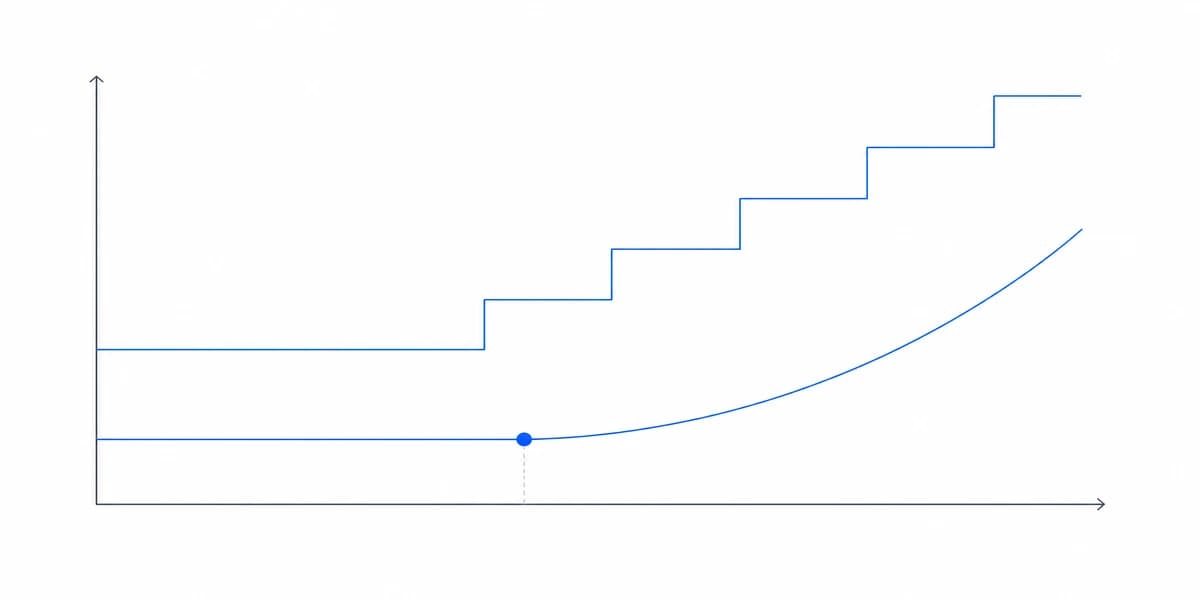
The benefits of embedded analytics compound over time. Faster deployment leads to faster customer adoption. Better user experience leads to lower churn. New revenue streams justify continued investment. No infrastructure for you to run frees your team to innovate.
The pattern we're seeing: teams who embed analytics early gain a sustainable competitive advantage. Teams who delay lose deals to competitors with better dashboards.
Where to go next
- Embedded analytics guide: the three routes to shipping it, what each one costs in calendar time, and the four things that set your launch date.
- Branded Analytics Solutions: branded analytics means the dashboard carries your identity, not the vendor's.
- Embedded Analytics articles: every article in this cluster.
Ready to launch customer-facing analytics?
Stop losing customers to competitors with better analytics. Sumboard's customer-facing analytics platform lets you launch self-service dashboards in days, not months.


