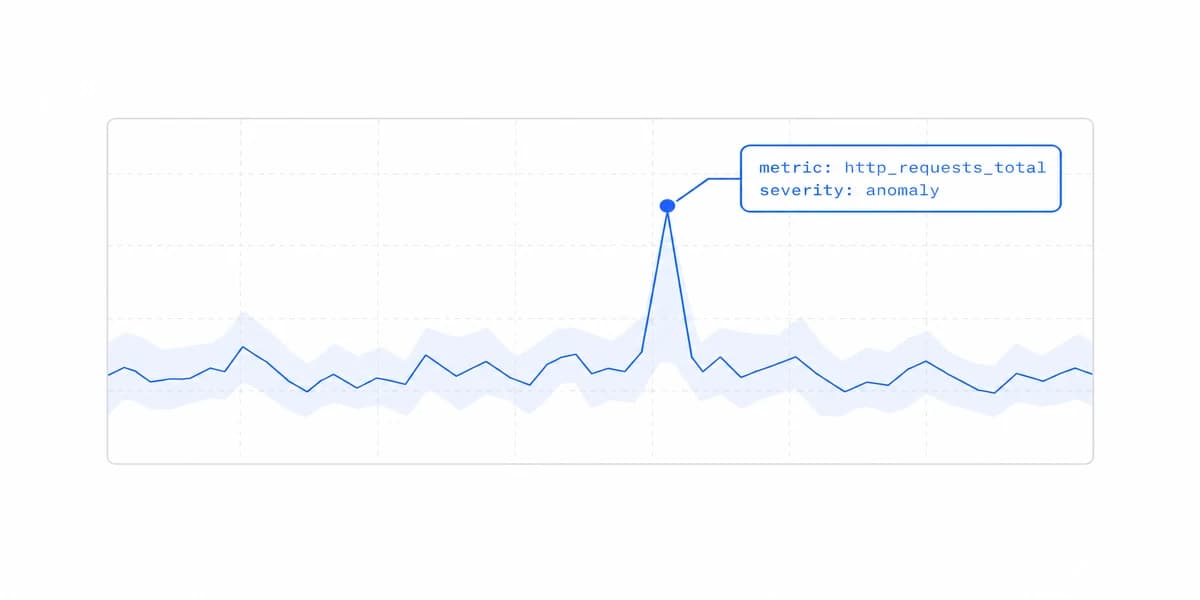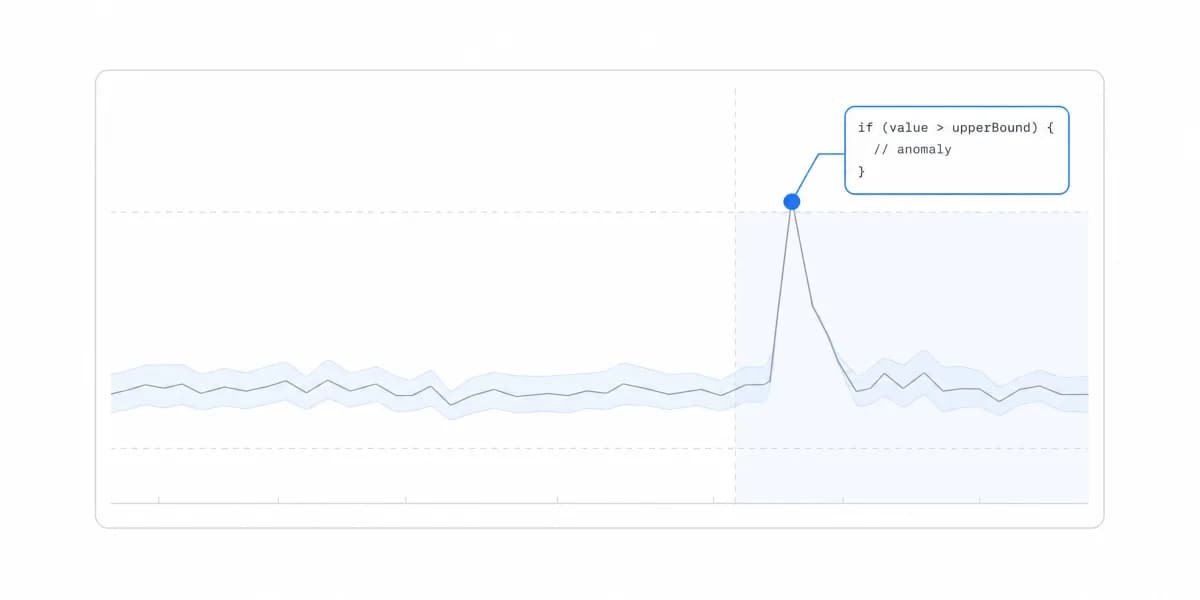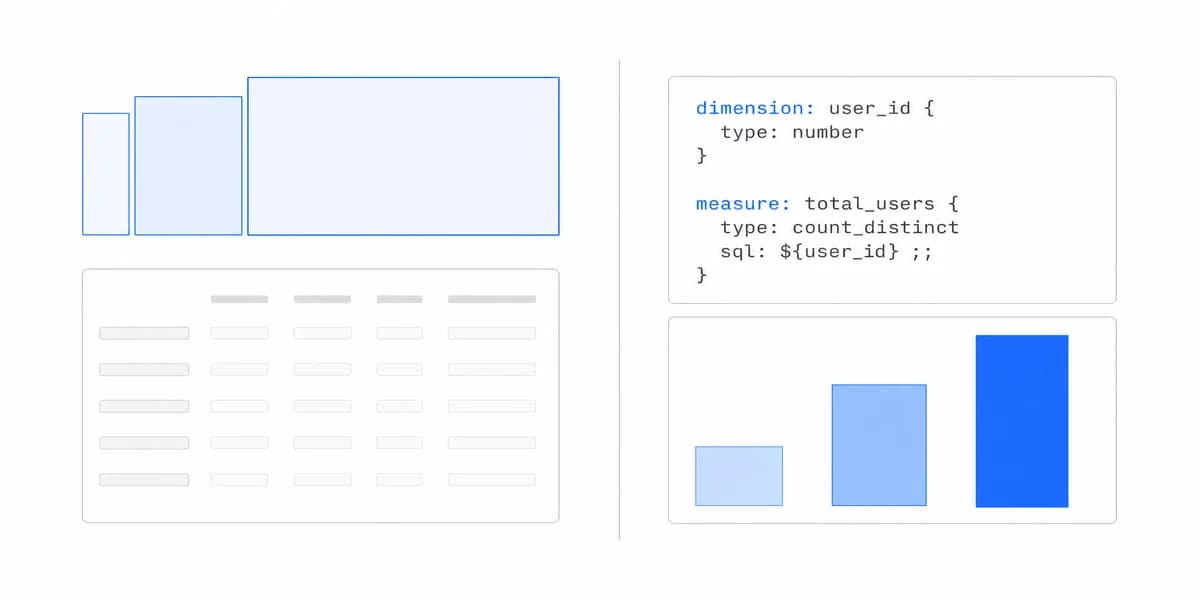
An analytics view often creates a follow-up question: filter this by region, compare it with last year, or show which segments contributed to the change.
Those questions can be supported through deterministic interactions, natural language, or a combination. The interface choice should follow the task and risk.
That's where the evolution from static reports to interactive analytics (and eventually conversational BI) comes into play.
The Follow-Up Question Is the Product Requirement
A fixed report can show an observation without supporting the next investigation. A product manager may need a drill-down, contribution view, filter, or approved query after noticing a change.
When the product cannot support that task, users may export data or request an analyst-built report. Measure which follow-up questions recur before choosing a new interaction model.
Conversational BI is one possible response, not the definition of self-service.
What Is Conversational BI (And Why It Matters Now)
Conversational BI accepts a natural-language question or follow-up and returns a governed analytical response. The response may be a clarification, metric, table, chart, explanation, or refusal when the request is ambiguous or unsupported.
Natural-language query systems predate current language models. Modern models can broaden language handling and clarification, but should not be described as trained on a customer's data unless that is actually the deployment design. AI-powered analytics still needs an approved semantic and execution layer.
Metadata and semantic definitions remain necessary. "Customers" may mean accounts, contacts, buyers, or a segment; a system should clarify or expose the selected definition rather than guessing silently.
Fluency must not be confused with correctness or access. The system should reveal scope, filters, time range, definitions, and data freshness with every material answer.
How Conversational BI Works (The Three-Layer Architecture)
One useful architecture separates three responsibilities:
Conversation and intent layer: Captures the question, explicit conversation state, supported vocabulary, and clarification choices. It should not decide authorization.
Semantic and execution layer: Maps approved terms to governed metrics, dimensions, relationships, filters, and time logic. Trusted services enforce authorization and execute bounded queries; generated SQL should not bypass those controls.
The semantic layer improves consistency but does not guarantee accuracy. Definitions, source quality, joins, permissions, and query plans still require tests and owners.
Validation and presentation layer: Checks result shape and scope, then shows a table, chart, summary, provenance, and the active conversational context. A follow-up such as "top three by revenue" should display which entity, metric, filters, and period it inherited.
Keeping these responsibilities separate makes the system easier to evaluate, audit, and fail safely.
An Internal Prototype and a Customer-Facing Feature Carry Different Requirements
An internal prototype and a customer-facing analytical feature have different trust, security, support, and explanation requirements. A customer-facing release should begin with a recurring task whose expected answer can be evaluated.
Internal teams may use natural-language access to explore pipeline, budget, or operational metrics. The same interface should not automatically be exposed to customers: tenant boundaries, supported metrics, failure behavior, and answer provenance need explicit controls.
Compare two ways to support a recurring follow-up:
Support-mediated path
- Customer sees unusual pattern in dashboard
- Requests an explanation from support
- An analyst reproduces the scope and checks the result
- Support returns a static answer or saved view
Product-supported path
- Customer uses approved filters, drill-downs, or a bounded natural-language query
- The product exposes the metric, comparison period, filters, and freshness
- Customer inspects which segments changed
- Ambiguous or unsupported questions are clarified or declined
The second path can reduce repeated support work when it returns a trustworthy result. It also creates new product obligations: permissions, definitions, evaluation coverage, observability, and a deterministic fallback. Self-service discovery is an operating model, not just an interface label.
Many follow-up questions can be handled with filters, comparisons, contribution views, and linked detail before adding a conversational surface. Instrument those interactions and support requests to determine whether natural language improves task completion enough to justify its additional controls.
The Clarification Budget Is Small, and Spending It Badly Loses to a Filter
A conversational interface that asks two questions before answering has already cost the user more than the dropdown it replaced. That is the bar it is competing against, and it is a low one to lose to.
Spend the budget deliberately. Ask only where the ambiguity would change the answer materially, offer the likely interpretations as choices rather than an open prompt, and answer with a stated assumption plus a one-click correction where the risk of being wrong is low. A question the system could have resolved from context is a question that should not have been asked.
What Conversational BI Cannot Answer, and Should Say So
Two classes of question look identical in a chat box and are not. "What was revenue last quarter" resolves to a metric, a filter, and a period. "Why did revenue fall last quarter" asks for a cause, and no query returns one.
A system that answers the second with a correlation it found in the data has produced a confident narrative rather than an answer, and a customer will act on it. The safe behaviour is to answer the part that is answerable, name the largest contributing slices as contributors rather than causes, and say plainly that attribution is not something the query can establish. Getting this boundary right is what separates a governed conversational surface from a plausible one.
What It Takes to Ship Conversational BI to Customers
Making conversational BI production-ready for customer-facing use requires stricter controls than a limited internal experiment.
Govern the analytical contract
Define supported metrics, dimensions, joins, filters, time logic, freshness expectations, and owners. If "customer" has several valid meanings, require a clarification or expose the selected definition. Test source quality and semantic behavior independently from language generation.
Constrain and verify execution
Keep tenant authorization and query limits in trusted services outside the model. Allow only approved tools and semantic objects, validate the result shape and scope, and show the query context used to produce the answer.
Decline or clarify questions outside the supported surface. A semantic layer narrows the space of valid queries, but it does not by itself prove that the selected metric, join, filter, or interpretation is correct.
Evaluate representative tasks
Create an evaluation set from real, permission-safe questions and expected analytical contracts. Cover ambiguity, date interpretation, filters, joins, tenant access, prompt injection, empty results, stale data, conversation carryover, and unsupported requests. Track corrections and escalations after release.
Integration effort depends on the existing embedded analytics platform. A governed semantic and authorization layer provides a safer starting point than unrestricted raw-database access, but conversation state, evaluation, presentation, and operational monitoring still require dedicated work.
Start with one bounded task and compare the conversational experience with deterministic controls on completion rate, correctness, time, and support demand. Expand only when the evidence supports another task.
Conversational BI is one interaction pattern for analytical work. It can make flexible question formulation useful, while filters, drill-downs, comparisons, and saved views remain better for many repeatable tasks.
Choose the interface from observed user tasks and evaluate it against a governed analytical contract. Whether the product uses natural language or deterministic controls, it should expose definitions, scope, freshness, and failure states.
Solve the recurring follow-up question first. Then decide whether a conversational layer adds enough measurable value to justify its security, evaluation, and operational cost. The broader AI analytics guide covers the surrounding architecture and rollout decisions.
Where to go next
- AI analytics guide: the seven categories of AI analytics and the different question each one answers.
- AI Data Visualization: evaluate AI visualization through interpreted questions, governed semantics, authorization.
- AI Analytics articles: every article in this cluster.
Ready to launch customer-facing analytics?
Stop losing customers to competitors with better analytics. Sumboard's customer-facing analytics platform lets you launch self-service dashboards in days, not months.